AI-generated (Gemini Pro)
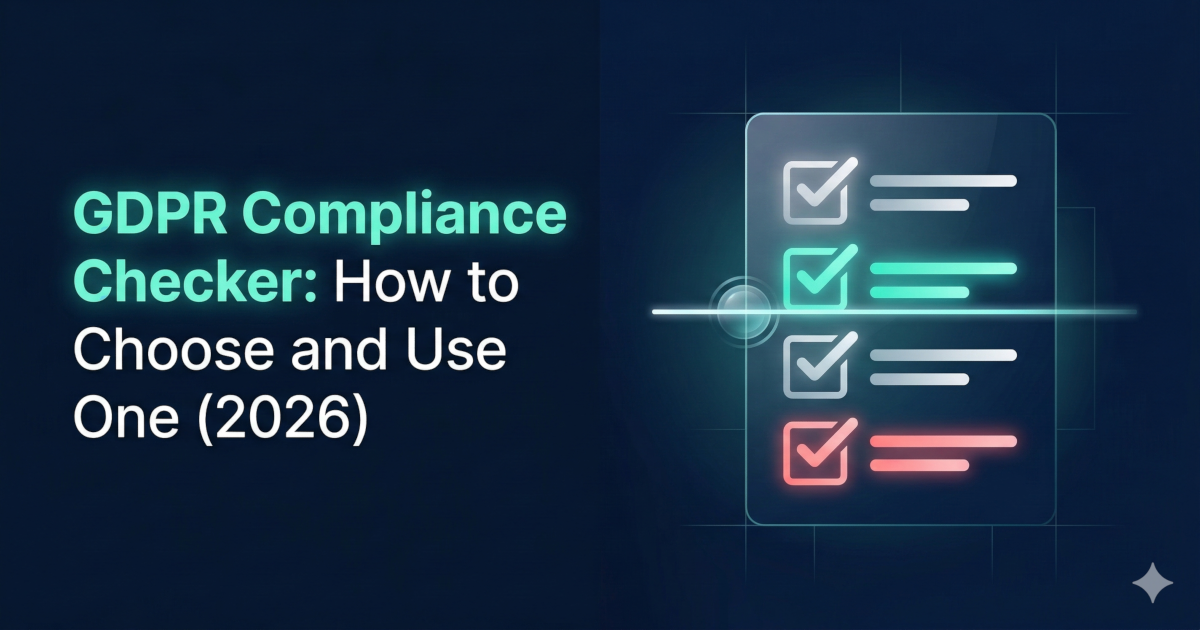
GDPR Compliance Checker (2026): How to Choose the Best Cookie Audit Tool
GDPR Compliance Checker (2026): How to Choose the Best Cookie Audit Tool
The best cookie audit tool is one that verifies real runtime behavior, not just a static cookie inventory. It should detect scripts and trackers firing before consent, map third-party requests, and prioritize remediation. Start with a runtime audit report, then validate fixes with re-scans after each tracking or CMP change.
"GDPR compliance checker," "GDPR scanning tool," and "cookie audit tool" are often used interchangeably. Both refer to tools that assess your website for compliance risks. This guide explains what they do, how they differ from consent or policy tools, and how to choose and use one. Scope: EU/EEA GDPR and ePrivacy (cookies). UK GDPR has equivalent requirements.
This article is for educational purposes and does not constitute legal advice. For compliance decisions, consult a qualified legal or privacy professional.
- GDPR compliance checker
A tool that scans or audits your website for GDPR-related issues: cookies and tracking before consent, consent banner behaviour, and disclosure accuracy. It finds issues; it does not create policies or display banners.
- GDPR scanning tool
Often the same as a compliance checker. Some vendors use "scanner" for cookie-list or static analysis; "checker" or "audit" for behaviour-focused tools. For real compliance, prefer tools that check behaviour (runtime).
- Runtime audit
Testing that runs your site in a real browser and observes what loads and when — including trackers that fire before consent. Only runtime audits can detect pre-consent firing and hidden trackers.
- Static scan
Analysis that reads page source, cookie lists, or HTML only. It can miss trackers that load after page load or that depend on user interaction.
What a GDPR compliance checker actually does
A compliance checker typically:
- Checks for: Cookies or tracking loading before consent, missing or misleading privacy disclosures, consent banner presence and behaviour (e.g. does "Reject" actually block scripts?).
- Does not: Create privacy policies, display consent banners, or "fix" your site. It finds issues and reports them; you implement fixes.
Cookie audit tools vs cookie scanning tools: what is the difference?
Both terms describe tools that check your site for cookie and tracking compliance issues, but the scope differs:
- Cookie audit tool — typically implies a deeper, evidence-based check: what fires before consent, what third-party requests are made, what the risk exposure is. Usually paired with a report and remediation guidance.
- Cookie scanning tool — often used for static or inventory-style checks: listing cookies found on a page, categorizing them, and detecting policy mismatches. Can miss dynamic or post-load behavior.
For real GDPR compliance verification, use a runtime cookie audit tool — one that runs the site in a real browser and observes actual behavior, not just what appears in the HTML or a cookie list.
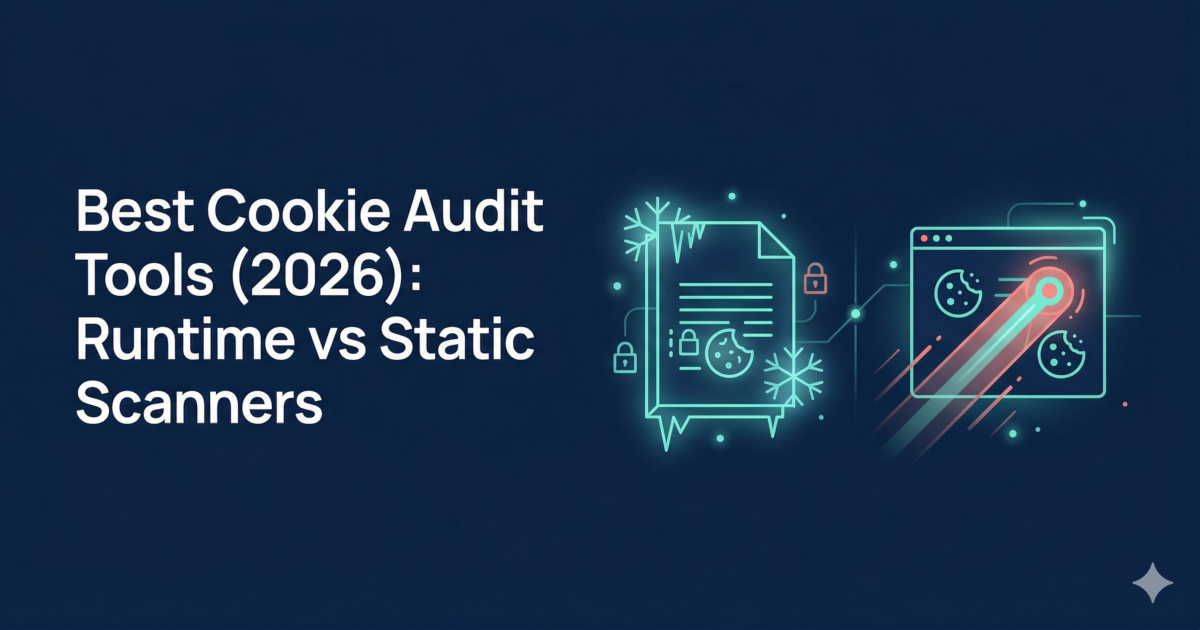
Runtime vs static checkers
| Approach | What it does | Limitation |
|---|---|---|
| Runtime | Runs your site in a real browser, rejects consent, and reports what actually fires (requests, cookies, scripts). | Requires a tool that supports browser-based testing. |
| Static | Reads HTML, cookie lists, or a single snapshot. | Misses trackers that load dynamically or after consent; can give false assurance. |
For real compliance, use a runtime checker. Pre-consent firing and hidden trackers are only visible when the site is executed like a real user. See Why runtime GDPR scanning detects real violations.
How to choose a GDPR compliance checker
- Runtime capability — Prefer tools that run a real browser and report what fires before consent.
- EU-focused risk model — Checks aligned with GDPR and ePrivacy (e.g. consent before non-essential processing).
- Clear report — Findings that you can act on (which URLs, which scripts, remediation hints).
- Recurring scans — If you need ongoing assurance, choose a tool that supports scheduled or repeat scans.
Avoid "scanners" that only list cookies and do not test whether tracking runs before consent.
How to use one
- Enter your site URL (or domain).
- Run the scan (often under a minute).
- Review the report: pre-consent requests, cookie/tracker list, consent banner issues.
- Fix issues (e.g. gate tags on consent, fix CMP configuration).
- Re-scan to confirm.
For a free runtime check: Is your website GDPR compliant? Free test. For a comparison of tools: Best GDPR compliance scanners 2026.
Run a free GDPR compliance check. See what loads before consent and which risks your site has.
Related Articles