GDPR Compliance for SaaS (2026): Practical Checklist
Ott Ristikivi | Founder & CEO of SecureSpells
10 min read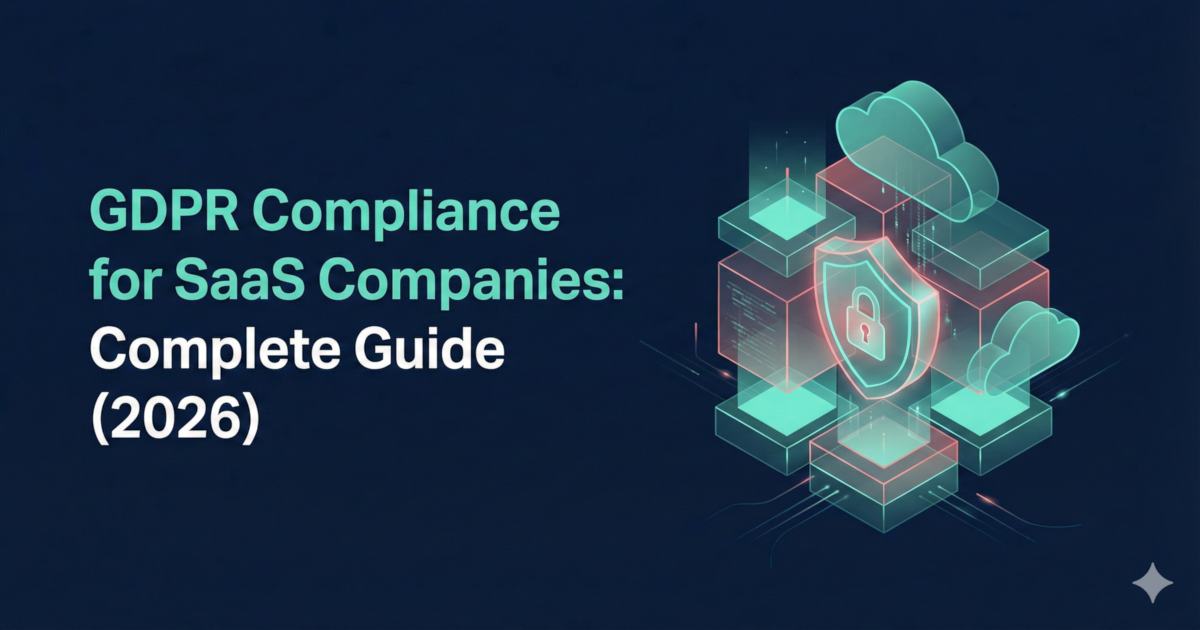
AI-generated (Gemini Pro)
Step-by-step: GDPR compliance for SaaS (2026)
SaaS GDPR compliance in 2026 has two surfaces: your marketing site and your application. The marketing domain is where pre-consent trackers most often leak data, even when a banner is visible. The app is where DPAs, subprocessors, retention, and lawful-basis discipline matters. Treat policies and contracts as necessary — then prove runtime behavior on production URLs.
SaaS teams should verify three things first:
- Consent gating: non-essential tags do not fire before consent.
- Processor reality: DPAs + subprocessor list match what you actually use.
- Runtime evidence: “Reject all” blocks tracking in a real browser session.
If you run a SaaS company and have EU users, GDPR applies to you — even if your company is not in Europe. Many SaaS founders underestimate this risk; regulators do not. This guide covers why GDPR matters for SaaS, the biggest risks, a practical checklist, and how to audit and fix your application.
- GDPR for SaaS
If you offer software as a service to users in the EU (or EEA), you process personal data and must have a lawful basis, provide transparency, honour rights (access, deletion, etc.), and use processors under contract. SaaS is high-risk because data is processed continuously.
- Data Processing Agreement (DPA)
A contract required under GDPR Art. 28 when you use a processor (e.g. hosting, analytics, support tools). It sets out processing instructions, security, and sub-processor rules.
- Runtime audit
Testing your app or marketing site in a real browser to see what actually loads and when — e.g. trackers before consent. Essential for SaaS because many violations are invisible in static checks.
SaaS companies process personal data continuously: emails, accounts, analytics, IP addresses. That makes them visible to regulators and creates obligations around consent, disclosures, DPAs, and technical measures. The biggest practical risks are often simple: trackers (e.g. Google Analytics, Hotjar, Meta Pixel) firing before consent, third-party processors without proper contracts, and hidden runtime violations. This guide gives a SaaS-focused checklist, explains how to audit your application, and points to tools and next steps. For product and pricing, see SecureSpells and pricing.
This article is for educational purposes and does not constitute legal advice. For compliance decisions, consult a qualified legal or privacy professional.
Why GDPR matters specifically for SaaS
SaaS companies process personal data continuously. Examples include email addresses, user accounts, analytics data, and IP addresses. That makes SaaS a high-risk category: regulators look at how you collect, use, and protect data, and whether you have a lawful basis and clear disclosures. Even if your company is not in Europe, offering services to EU users triggers GDPR. Learn about recent enforcement: GDPR fines affecting SMEs.
Biggest GDPR risks for SaaS
1. Trackers firing before consent
This is extremely common. Analytics (e.g. Google Analytics), session tools (e.g. Hotjar), and ad pixels (e.g. Meta Pixel) often load on first visit, before the user has accepted cookies. That creates immediate compliance risk. Learn more: Google Analytics GDPR compliance guide.
2. Third-party processors
Most SaaS tools use third parties: Stripe, Intercom, HubSpot, cloud providers, etc. Each processor that handles personal data creates a compliance responsibility: you need a Data Processing Agreement (DPA), clear instructions, and (where required) sub-processor information. Skipping DPAs or not listing processors in your privacy policy increases risk.
3. Hidden runtime violations
Many violations are invisible in configuration or policy alone — they happen at runtime. Scripts load after page load, tag managers fire tags before consent, and data is sent to third parties without the user’s choice. Only runtime auditing can detect these. Use GDPR compliance scanners to audit your SaaS. Explained here: Why runtime GDPR scanning detects real violations.
SaaS GDPR compliance checklist
Minimum requirements to work toward:
- Privacy policy — Clear, accessible, and accurate: what you collect, why, how long, and users’ rights.
- Cookie consent banner — Functional consent for non-essential cookies and tracking; tracking must not run before consent.
- Data Processing Agreements (DPAs) — In place with every processor that handles personal data (Art. 28).
- Secure storage — Appropriate technical and organisational measures (e.g. encryption, access control).
- Ability to delete user data — Process and tools to honour deletion requests (Art. 17).
Full checklist: GDPR compliance checklist.
How to audit your SaaS application
Manual audits miss most violations because they don’t capture runtime behaviour. Use an automated runtime audit that runs your marketing site or app in a real browser and reports what loads and when. A good audit detects trackers firing before consent, data sent to third parties without consent, and other consent or disclosure gaps. For a quick structured pass on a public URL, use the free cookie audit tool.
Audit your SaaS site: Run a runtime compliance scan on your main marketing or signup domain. See what trackers and requests run before consent.
Run a free audit: SecureSpells.
Marketing site vs application: two different GDPR surfaces
SaaS companies often audit the wrong thing first. The product application looks clean (it requires login, has limited public exposure), while the marketing site is where the real risk sits.
Marketing site checklist
The domain you use for landing pages, the blog, pricing pages, and signup flows is public and carries the highest tracker load:
- Analytics tag (GA4, Plausible, Mixpanel, etc.) gated behind consent
- Ad pixels (Meta, LinkedIn, Google Ads) not firing until accepted
- Session recording tools (Hotjar, FullStory) blocked pre-consent
- Live chat (Intercom, Crisp) not loading third-party scripts before consent
- CMP configured to block tags—not just display a notice
Application checklist
The product itself (authenticated, post-signup) operates under different rules—often contract as the lawful basis rather than consent:
- Lawful basis documented for each processing activity (analytics, support, payments)
- DPA in place with every sub-processor (Stripe, AWS, Intercom, etc.)
- Data retention periods set and enforced
- User deletion workflow tested (right to erasure, Art. 17)
- Privacy policy accurately describes the application's data flows
Common SaaS failure mode: analytics loads before consent
The most frequent violation auditors find: the marketing site loads Google Analytics, a Meta Pixel, or similar on first visit, before the consent banner has been interacted with. The banner is visible but not functional—it is UI, not a gate.
The fix is not a new privacy policy. The fix is ensuring the tracking script is not loaded (or not executed) until after consent. This is a GTM or CMP configuration issue, not a legal one. After fixing it, verify with a runtime audit.
See Third-party trackers and GDPR compliance risks for a detailed breakdown of common pre-consent firing scenarios.
Test your marketing site, not just your product. Pre-consent trackers on your homepage create the same liability as a product-level violation.
Real SaaS example: typical violation
A typical violation: analytics (e.g. Google Analytics) loads on first visit, before consent, even though a cookie banner exists. The banner does not actually block the script, so tracking starts immediately. That creates liability. Fixing it means gating analytics (and other non-essential trackers) on consent and verifying with a runtime test.
GDPR fines SaaS companies face
Under GDPR, fines can reach €20 million or 4% of global annual turnover, whichever is higher, for serious infringements (e.g. consent, lawful processing). Lower tiers apply to other breaches. SaaS companies have been fined; size and location do not exempt you. See: What happens if your website violates GDPR.
How to become compliant
- Audit your website — Use a runtime scanner (e.g. SecureSpells) on your main marketing or app domain to see what runs before consent and what third-party requests are made.
- Fix violations — Block non-essential trackers until consent, update your privacy policy and cookie banner, and put DPAs in place with processors.
- Monitor continuously — Sites and integrations change; re-scan regularly or use ongoing monitoring so new risks don’t slip in.
Audit your SaaS now: Run a free compliance scan — then fix and monitor.
Final takeaway
GDPR compliance is not optional for SaaS with EU users; it is essential. Understand the main risks (trackers before consent, processors without DPAs, hidden runtime issues), work through a checklist (policy, consent, DPAs, security, deletion), and audit your application with a runtime tool. Then fix and monitor. That is how you reduce risk and move toward compliant operation.
Frequently asked questions
Does GDPR apply to SaaS companies outside the EU?
Yes. If you offer services to users in the EU (or EEA) and process their personal data, GDPR applies to that processing regardless of where your company is based. You may need to designate an EU representative in some cases.
What are the biggest GDPR risks for SaaS?
Common risks: (1) Trackers (analytics, ads, session tools) firing before consent. (2) Using third-party processors (payment, support, marketing) without Data Processing Agreements. (3) Hidden runtime violations that only show up when you test what actually loads and when. A runtime audit addresses the technical side.
What should a SaaS GDPR compliance checklist include?
At a minimum: a clear and accurate privacy policy, a working cookie consent mechanism that actually blocks non-essential tracking until consent, DPAs with all processors, appropriate security measures, and a way to honour user rights (e.g. access, deletion). Then verify behaviour with an audit.
GDPR Compliance Checklist for SaaS (2026)
A practical checklist for SaaS teams. Prioritize technical controls first, then documentation.
| # | Area | Control |
|---|---|---|
| 1 | Consent before tracking | Non-essential tags (analytics, ads, session tools) must not fire until after the user accepts. Verify with a runtime audit. |
| 2 | Processor mapping | List all third-party processors (hosting, analytics, support, payments). Confirm Data Processing Agreements (DPAs) are in place for each. |
| 3 | Privacy policy accuracy | Policy must name all tools used, describe data collected, and match actual behavior. Update after each new integration. |
| 4 | Sub-processor transparency | Customers using your SaaS must be able to see your sub-processor list. Maintain and publish it. |
| 5 | Lawful basis documentation | Document the lawful basis (consent, legitimate interest, contract) for each processing activity. |
| 6 | User rights workflow | Have a process to handle access, deletion, and portability requests within statutory timeframes. |
| 7 | Security measures | Encryption at rest and in transit, access controls, and incident response plan documented. |
| 8 | Retention limits | Set and enforce data retention periods; delete or anonymize data after its purpose is fulfilled. |
| 9 | Runtime re-audit | Re-run compliance scan after each release or new integration — behavior can regress silently. |
Use GDPR compliance checker and audit guide to work through this checklist systematically.
Also: Sites and integrations change after every release. See why scheduled recurring audits catch what one-off checks miss.
How do I audit my SaaS for GDPR compliance?
Use a runtime compliance scanner on your main marketing or app domain. It will show what trackers and third-party requests run before consent and highlight consent or disclosure gaps. SecureSpells offers a free audit: Run free scan. Follow up by fixing issues and re-scanning or monitoring.