AI-generated (Gemini Pro)
Privacy Policy Best Practices for GDPR and ePrivacy Compliance
Privacy Policy Best Practices: Beyond the Template
In 2026, a "copy-paste" privacy policy is a major red flag for regulators. GDPR Article 12 requires that information be provided in a "concise, transparent, intelligible, and easily accessible form," using clear and plain language.
If your policy is 50 pages of dense legalese, you are failing the transparency test. Here is how to structure a policy that builds trust and satisfies the law.
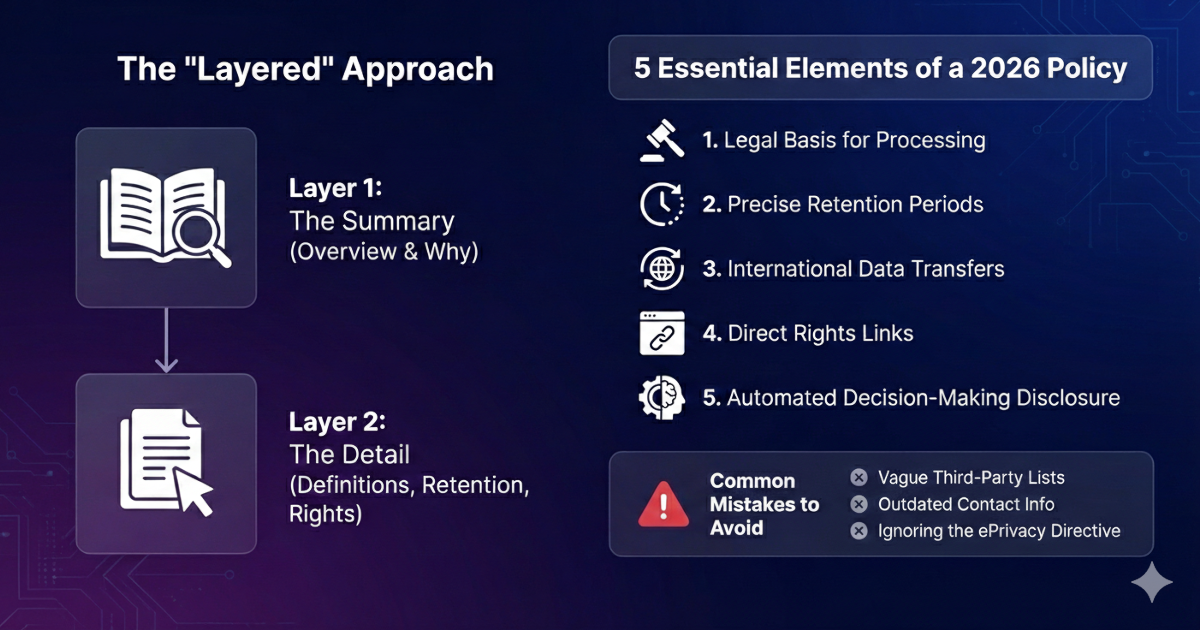
The "Layered" Approach
Don't overwhelm users. Use a layered structure:
- Layer 1 (The Summary): A quick overview of what data is collected and why.
- Layer 2 (The Detail): The full legal definitions, retention periods, and user rights.
5 Essential Elements of a 2026 Policy
1. The Legal Basis for Processing
You must specify which of the six legal bases under GDPR Article 6 you are using for each data type (e.g., Consent for newsletters, Contractual Necessity for shipping, or Legitimate Interest for basic security).
2. Precise Retention Periods
"We keep your data as long as necessary" is no longer acceptable. You must provide specific timeframes (e.g., "Invoices are kept for 10 years per tax law; marketing data is deleted after 24 months of inactivity").
3. International Data Transfers
If you use US-based SaaS tools (like Slack, Hubspot, or Google), you must explain the safeguards in place (e.g., Data Privacy Framework or Standard Contractual Clauses).
4. Direct Rights Links
Don't just list the rights (Right to Access, Erasure, etc.). Provide a clear way to exercise them—ideally a dedicated form or a specific email address like privacy@yourcompany.com.
5. Automated Decision-Making Disclosure
If you use AI to score leads or personalize pricing, you must disclose this. Users have the right to understand the logic behind automated decisions that affect them (GDPR Articles 13(2)(f), 14(2)(g), and 22).
Common Mistakes to Avoid
- Vague Third-Party Lists: Instead of "We share data with partners," say "We share data with our payment processor (Stripe) and shipping provider (DHL)."
- Outdated Contact Info: Ensure your Data Protection Officer (DPO) or privacy contact info is current.
- Ignoring the ePrivacy Directive: Your Privacy Policy should be separate from—but linked to—your Cookie Policy.
Is your policy in sync with your site's behavior? A policy is useless if it doesn't match the trackers actually running on your site.
Need a technical audit to ensure your policy accurately reflects your site's data flow? Start your SecureSpells audit today.
Related Articles